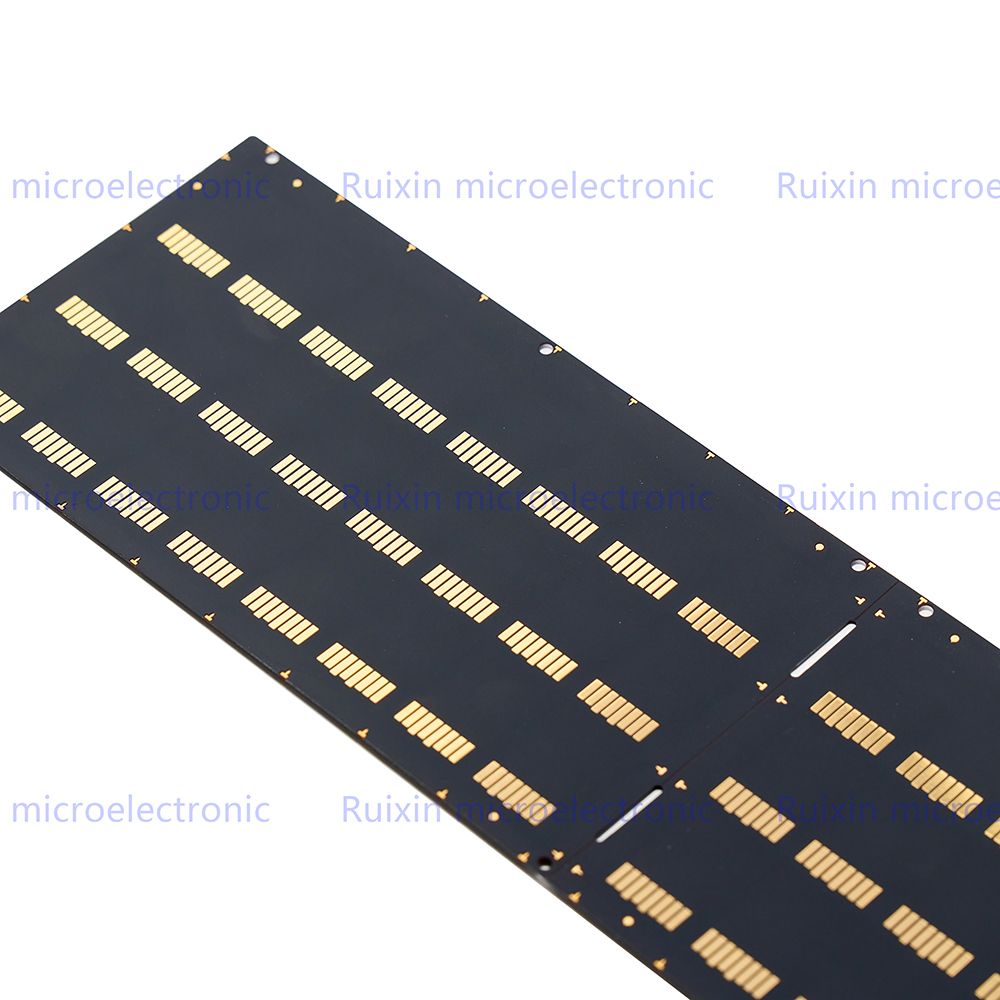
The core difference lies in the physical packaging rather than the storage technology itself. Traditional NAND refers to chips with external pins (like TSOP), while BGA (Ball Grid Array) NAND uses solder balls under the chip. BGA enables significantly higher speeds, better thermal management, and ultra-compact, space-saving designs.
With the rapid growth of artificial intelligence, IoT devices, automotive electronics, industrial equipment, and embedded systems, storage devices require higher density, smaller sizes, and better reliability. NAND Flash technology continues to evolve to meet these demands.
Among various storage solutions, BGA NAND has become an important choice for compact electronic devices because it integrates NAND Flash memory into a small BGA package. Compared with traditional NAND Flash solutions, BGA NAND provides advantages in size, durability, integration, and system design flexibility.
As a professional BGA packaging manufacturer, RuiXIN focuses on advanced BGA IC packaging solutions and high-performance memory products. The company provides reliable BGA NAND supplier services for customers requiring industrial BGA memory, high density BGA NAND, and embedded BGA storage solutions.

BGA NAND is a NAND Flash memory solution packaged using BGA package technology. BGA stands for Ball Grid Array, a packaging method that connects the chip to the PCB through an array of solder balls instead of traditional pins.
A typical BGA memory chip integrates NAND Flash dies, controllers, and related components into a compact package, providing a complete storage solution for embedded applications.
Compared with separate NAND components, BGA NAND offers:
Smaller PCB footprint
Higher integration level
Better signal performance
Improved mechanical reliability
Easier automated assembly
BGA IC packaging is an advanced semiconductor packaging technology designed for high-density electronic devices.
The main characteristics include:
Bottom-side solder ball connections
Shorter electrical paths
Better heat dissipation
Higher input/output density
Improved resistance to vibration
Because of these advantages, BGA packaging is widely used in memory chips, processors, communication modules, and industrial electronics.
Traditional NAND Flash usually refers to standalone NAND memory chips or removable storage components.
Common characteristics include:
Separate memory chips
Larger PCB space requirements
External controller design
More complex hardware integration
Traditional NAND solutions are still widely used in applications where flexibility and easy replacement are important.
BGA NAND combines NAND Flash memory into a compact package, allowing manufacturers to integrate storage directly into the main PCB.
The structure typically includes:
NAND Flash memory dies
Controller components
BGA package substrate
Solder ball connection system
This integrated design makes BGA NAND ideal for modern compact electronic devices.
One of the biggest advantages of BGA NAND is its compact design.
Traditional NAND Flash requires additional space for:
Connectors
External circuits
Supporting components
A BGA storage module integrates multiple functions into one package, reducing PCB space and allowing manufacturers to create smaller products.
BGA NAND provides a higher level of integration compared with traditional NAND solutions.
A single BGA memory chip can include:
NAND Flash storage
Memory controller
Firmware management
Error correction functions
This simplifies product design and reduces development complexity.
For industrial and embedded applications, reliability is critical.
Compared with traditional storage solutions, industrial BGA memory provides:
Better vibration resistance
Improved shock protection
More stable operation
Reduced connection failure risks
This makes BGA NAND suitable for industrial equipment, automotive electronics, and embedded systems.
Traditional NAND solutions often require multiple assembly steps.
With BGA IC packaging, manufacturers can achieve:
Faster PCB assembly
Higher production efficiency
Improved automation compatibility
Reduced manufacturing complexity
As electronic devices become more powerful, storage requirements continue increasing.
High density BGA NAND enables manufacturers to achieve larger storage capacity while maintaining a compact form factor.
Applications include:
AI devices
Industrial computers
Smart terminals
Automotive systems
Network equipment
Embedded BGA storage is designed for long-term operation in embedded environments.
It provides:
Stable data access
Compact integration
Lower power consumption
Reliable operation
Using BGA NAND allows engineers to optimize PCB layouts and create smaller, more efficient electronic products.
Industrial devices often require storage solutions that can operate under harsh conditions.
Applications include:
Industrial controllers
Automation equipment
Monitoring systems
Embedded computers
Modern vehicles rely on advanced storage solutions for:
Infotainment systems
Navigation systems
Driver assistance systems
Vehicle control units
BGA NAND provides stable performance in automotive environments.
Compact consumer devices require high-performance storage with minimal space requirements.
Common applications:
Smart devices
Wearable electronics
Digital products
Portable equipment
Networking and communication systems require reliable embedded storage.
BGA NAND is widely used in:
Routers
Industrial gateways
Communication modules
A professional BGA NAND supplier should have strong experience in semiconductor packaging and memory solutions.
Important factors include:
BGA packaging technology
Product testing capability
Quality control system
Customization support
Different applications require different memory specifications.
Before selecting a supplier, consider:
Storage capacity
Operating temperature range
Data reliability
Power consumption
Product lifetime
Working with an experienced BGA packaging manufacturer helps ensure product stability and long-term supply.
A professional supplier should provide:
Advanced packaging technology
Strict quality inspection
Engineering support
Customized solutions
RuiXIN specializes in BGA IC packaging and memory solutions, providing reliable packaging technologies for different electronic applications.
With professional manufacturing capabilities, RuiXIN supports customers requiring high-quality BGA NAND and BGA memory chip products.
As an experienced BGA NAND supplier, RuiXIN provides stable storage solutions designed for industrial and embedded applications.
The company focuses on:
Product reliability
Manufacturing quality
Application compatibility
Customer requirements
RuiXIN provides embedded BGA storage solutions for customers seeking compact, high-performance, and reliable memory products.
Email: [email protected]
The main difference is packaging design. BGA NAND integrates NAND Flash into a compact BGA package, while traditional NAND Flash usually requires separate components and additional PCB design.
BGA NAND offers compact size, strong reliability, vibration resistance, and stable performance, making it suitable for industrial environments.
A BGA memory chip is a memory component packaged using Ball Grid Array technology, allowing high-density connections and compact integration.
Yes. Embedded BGA storage is widely used in embedded systems requiring reliable, space-saving, and high-performance storage.
The difference between BGA NAND and traditional NAND Flash mainly comes from packaging technology, integration level, size efficiency, and reliability performance.
With the increasing demand for compact and powerful electronic products, BGA package solutions are becoming more important in industrial, automotive, and embedded applications.
Choosing an experienced BGA packaging manufacturer and reliable BGA NAND supplier like RuiXIN can help businesses achieve stable, high-density, and efficient storage solutions.
Email: [email protected]
October 13,2026
How Can OEMs Reduce Storage Qualification Failures?October 13,2026
SATA vs NVMe SSD: Which Should OEM Buyers Choose?October 13,2026
How Can Engineers Estimate Embedded Storage Write Workloads?October 13,2026
How Should OEMs Manage Embedded Storage Lifecycle Risks?